Your Construction Company May Have Outgrown Its Name: 7 Signs It’s Time to Rebrand

This is a subtitle for your new post
A lot of construction companies choose their name before they really know what the company is going to become.
Maybe you used your last name.
Maybe you combined your initials with your business partner's.
Maybe you added “Construction,” “Roofing,” “Painting” or “Tree Service” because you needed something quickly so you could get your license, buy a truck and start taking jobs.
There is nothing wrong with that.
The problem happens five, ten or twenty years later.
Now you have multiple crews.
Your trucks are everywhere.
You're bidding larger projects.
You've built hundreds of relationships.
Maybe you're doing several million dollars a year.
Maybe you're trying to win commercial work, work with developers, property managers, HOAs or general contractors.
But your company is still operating under a name that was created when the entire business was you, a pickup truck and a phone.
At Apex Operations, we've seen this happen firsthand.
During a recent strategy session with an established Bay Area contractor, we spent nearly an hour discussing whether the company had simply outgrown its original name.
The interesting part wasn't the name itself.
It was what the conversation revealed.
The company wasn't really changing who it was.
The business had changed already.
The name just hadn't caught up.
That leads to a question more established contractors should be asking:
Does your current name still represent the company you've become?
Here are seven signs that the answer may be no.
1. You Chose the Name Before You Had a Real Business Strategy
This is probably the most common situation.
When contractors first start companies, the immediate priorities aren't brand strategy and market positioning.
They're usually things like:
Getting licensed.
Finding customers.
Buying equipment.
Hiring employees.
Finishing jobs.
Making payroll.
So the company name gets created quickly.
Maybe it's your initials.
Maybe it's your family name.
Maybe it's the city where you started.
Maybe it's just the first decent name everyone agreed on.
Then the business grows around it.
We recently had this exact conversation with a contractor who explained that there hadn't been much strategy behind the original name. The company was launching quickly, the family had already been using certain initials, and they simply needed a name.
Years later, the question was completely different.
Instead of asking:
“What should we call this new business?”
We were asking:
“What name best represents the company we're trying to build over the next ten years?”
Those are two completely different decisions.
When naming a mature company, you need to think about your future customers, future employees, future markets and future opportunities.
If you were starting your company today with everything you know now, would you still choose the exact same name?
If the answer is no, that's worth paying attention to.
2. Customers Have Trouble Finding You Online
This is one of the biggest warning signs.
Search your company name on Google.
What happens?
Do you completely dominate the results?
Or do five other contractors with almost the same name appear?
This problem is especially common with contractor names built around initials or extremely generic terms.
Something like:
ABC Construction.
JC Tree Service.
Premier Roofing.
Quality Painting.
All-Pro Construction.
The problem isn't that those names sound bad.
The problem is that they can be extremely difficult to own.
Imagine someone gets referred to your company at dinner.
They don't save your number.
Two days later they remember:
“It was something like JC Tree…”
They search Google.
Now several businesses appear.
One has 300 reviews.
Another has 75.
Another has been around for 20 years.
Another services the exact same city.
Which one were they referred to?
You've created unnecessary friction at one of the most important moments in your customer's buying process.
Your company name should make it easier for people to find you, remember you and recognize you.
Not harder.
Your Brand Search Is Valuable Real Estate
Contractors spend enormous amounts of money trying to rank for searches such as:
“general contractor near me”
“roofing company San Jose”
“commercial painting contractor”
“ADU builder Bay Area”
But your easiest search to dominate should be your own company name.
When someone searches your brand, ideally the results should reinforce one company:
Your website.
Your Google Business Profile.
Your social profiles.
Your project pages.
Your reviews.
Your videos.
Your directory listings.
Your company.
If your current name makes that difficult because dozens of businesses share nearly identical branding, a more distinctive name may create a much stronger long-term foundation.
3. Your Name Makes the Company Sound Smaller Than It Actually Is
This one is subtle.
There is nothing wrong with being a local family business.
In construction, that history can actually be one of your biggest advantages.
But there is a difference between being a family-owned company and looking like a tiny company.
Imagine two businesses bidding a large property-management contract.
One sounds like a company built to manage complex properties.
The other sounds like one guy who started trimming trees out of his pickup.
They could have the exact same equipment.
They could have the exact same insurance.
They could employ the exact same number of people.
They could perform work at the exact same level.
But perception begins before anyone reads the proposal.
That's branding.
As contractors grow, they often begin pursuing clients such as:
Property-management companies.
HOAs.
Commercial developers.
General contractors.
Apartment owners.
Corporate campuses.
Municipalities.
Architects.
Designers.
Commercial property owners.
Those buyers are evaluating risk.
They want to know:
Can this company handle our account?
Do they have systems?
Will they show up?
Can they communicate professionally?
Can they handle multiple projects?
Will they still be around five years from now?
Your name alone won't answer those questions.
But your entire brand contributes to the answer.
If your company has become sophisticated while your name still sounds like the business you were fifteen years ago, there may be a disconnect.
4. You're Trying to Win a Different Type of Customer
One of the most important things we discuss with Apex clients is this:
Who are you trying to become attractive to next?
Your existing customers aren't always your future customers.
Maybe your company grew primarily through homeowners.
Now you want commercial contracts.
Maybe you built your reputation doing subcontracting.
Now you want direct-to-owner projects.
Maybe you've spent twenty years doing remodeling.
Now you're moving heavily into ADUs.
Maybe you built a roofing company in Modesto and now want to compete for premium projects throughout the Bay Area.
Your brand needs to make sense to the customer you're trying to attract next.
During our recent contractor strategy session, this became extremely clear.
The company still wanted high-end homeowners.
But it also wanted property managers, HOAs, multifamily communities and larger commercial accounts.
That means the brand had to accomplish something difficult.
It couldn't become so corporate that homeowners felt ignored.
But it couldn't feel so small and residential that a regional property manager questioned whether the company could manage an entire portfolio.
That's the balance good brand strategy should solve.
Your company name isn't just supposed to describe what you do today.
It should leave room for where you're going.
5. Your Brand Depends Too Much on You Personally
Here's a question construction-company owners don't ask often enough:
Would this company still be valuable if you weren't there?
A lot of successful contracting businesses are still heavily dependent on the owner.
The owner answers the phone.
The owner sells the jobs.
The owner knows every customer.
The owner's name is the company.
The owner's relationships generate the projects.
The owner's reputation is the brand.
That can build a great income.
But it's harder to build a transferable business that way.
A stronger company eventually develops assets that exist independently of the owner:
A recognizable brand.
Google visibility.
Customer reviews.
Repeat business.
Referral systems.
A CRM.
An email database.
Documented sales processes.
Documented operations.
A strong website.
A recognizable fleet.
Content.
Project case studies.
Commercial relationships.
The goal isn't to erase the founder.
The founder's story may be one of the company's greatest assets.
The goal is to create a business where the company itself carries value.
That's especially important if you ever want to bring in partners, pass the business to your children, acquire another company or eventually sell.
Even if you never sell the company, building it as though someone could buy it usually forces you to build a better business.
6. Your Visual Brand Has Become More Professional Than Your Name
This is something we've encountered directly at Apex.
A contractor hires us.
We upgrade the logo.
The typography gets better.
The colors become more intentional.
The website becomes dramatically more professional.
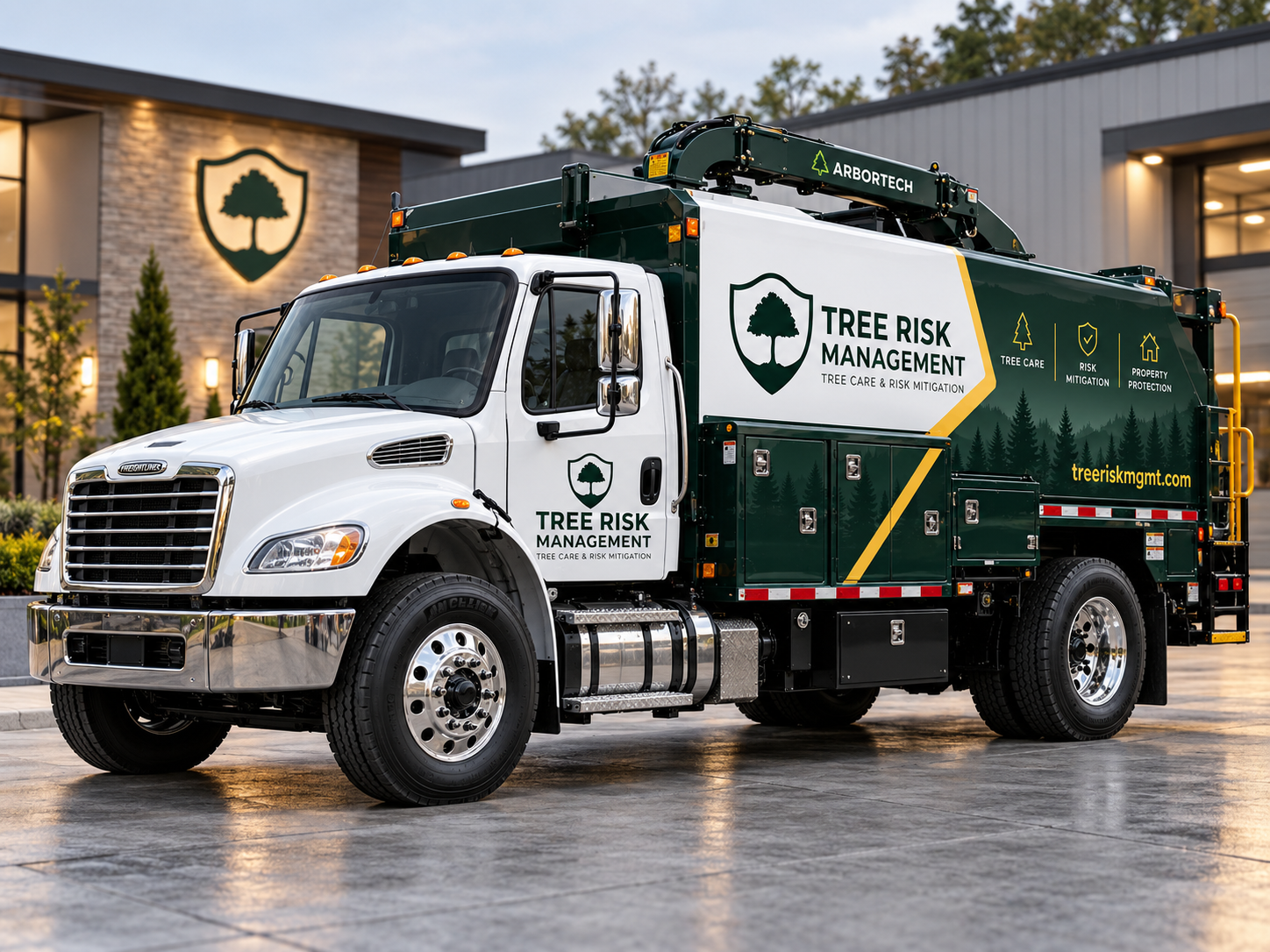
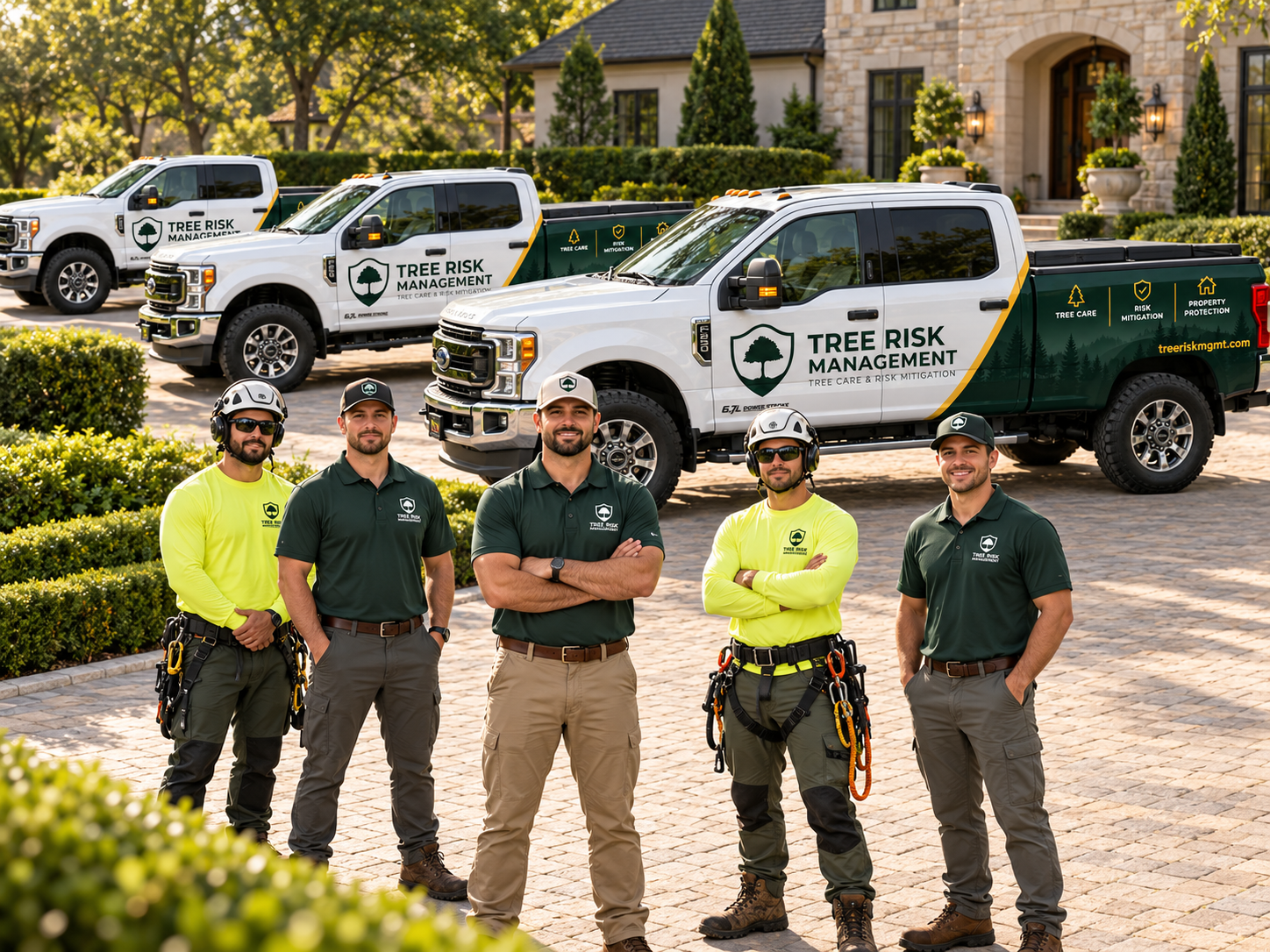
The trucks start looking like part of a real fleet.
The uniforms match.
The photography gets better.
Project videos look cinematic.
Proposals look cleaner.
Everything begins communicating:
“This is a serious company.”
Except the original name.
Now there's a mismatch.
The brand looks like a $20 million company.
The name sounds like the company when it had two employees.
That doesn't automatically mean you should rename the business.
But it deserves a conversation.
We recently reached this point while developing a much stronger corporate identity for a contractor.
Once we saw the new branding applied to trucks, uniforms and the website, the old company name suddenly felt disconnected from everything surrounding it.
That is exactly why branding should not be reduced to a logo.
Your name, logo, colors, website, trucks, uniforms, photography, messaging and reputation should all tell the same story.
7. Your Name Is Limiting the Company You're Trying to Build
This is the biggest sign.
Sometimes there isn't anything technically wrong with the current name.
You've simply grown beyond it.
Maybe you want five locations.
Maybe you want twenty trucks.
Maybe you want to acquire competitors.
Maybe you want to expand across Northern California.
Maybe you want $20 million in annual revenue.
Maybe you want recurring commercial contracts.
Maybe you're eventually building something that can operate without you.
Now picture that future company.
Picture twenty trucks lined up.
Picture the sign outside a 15,000-square-foot facility.
Picture your uniforms.
Picture the proposal being reviewed by a national property-management company.
Picture your company sponsoring an industry event.
Picture someone eventually acquiring the business.
Does your current name still fit?
If it does, keep it.
A rebrand should never happen simply because you're bored with your logo.
But if your name actively conflicts with the company you're building, that's different.
Your brand should not become a ceiling.
Don't Throw Away the Reputation You've Already Built
This is usually the biggest objection to rebranding.
And it's a legitimate one.
If you've spent 15 years building reviews, referrals, relationships and recognition, you shouldn't casually throw that equity away.
A good contractor rebrand should feel like an evolution rather than pretending the old company never existed.
The message can be simple:
Same people. Same quality. Same commitment. Bigger vision.
Your old company is part of the story.
Don't hide it.
Explain why you're changing.
Bring customers into the transition.
Show the old trucks.
Show the old logo.
Show old projects.
Tell the story of where the company started.
Then show where it's going.
That transition itself can become some of the strongest marketing content your company has ever created.
What About SEO When You Change Your Company Name?
This is where the transition needs to be handled carefully.
Rebranding can affect your website, Google Business Profile, citations, branded searches and the way existing customers find you.
That doesn't mean you should never change your name.
It means you need a migration strategy.
Depending on the scope of the rebrand, that can include keeping the existing website structure where possible, correctly redirecting changed URLs, updating internal links, updating company information across major directories, updating your Google Business Profile appropriately, maintaining consistency across real-world signage and online branding, and monitoring search visibility after the transition.
Don't change the company name on Monday and then slowly update everything else over the next six months.
Treat the launch like a coordinated event.
Your website, trucks, signage, uniforms, email addresses, Google presence, social media, proposals and customer communications should tell the same story.
So, Should You Rename Your Construction Company?
Maybe.
Plenty of great contractors should keep their existing names forever.
If your name has strong recognition, clean branded search results, a great reputation and enough flexibility for where you're going, changing it just for the sake of changing it doesn't make sense.
But if your business has dramatically evolved while your name hasn't, it may be worth asking the question.
At Apex Operations, we think the bigger question is:
Does your marketing accurately represent the company you've become?
Because this issue usually isn't isolated to the company name.
If the name is outdated, there's a good chance the website is outdated.
The project portfolio may be outdated.
The photography may not reflect your current work.
Your Google presence may not reflect your current markets.
Your messaging may still be talking to customers you've already outgrown.
And that is where a rebrand becomes more than design.
It becomes business strategy.
Frequently Asked Questions About Construction Company Rebranding
When should a construction company rebrand?
A construction company should consider rebranding when its current name or identity no longer represents the size of the business, target market, services, geographic reach or long-term direction of the company. A rebrand can also make sense when the existing name is difficult to distinguish online.
Is changing a construction company name bad for SEO?
It can create temporary disruption if handled poorly, especially when a domain, URLs, Google Business Profile or other online listings change. A planned migration with proper redirects, updated business information and consistent branding can reduce unnecessary problems.
Should I keep my last name in my construction company name?
There is nothing inherently wrong with using a family name. Many of the strongest construction companies are built around one. The more important question is whether the name supports the future company you're trying to build and is distinctive enough in your market.
Should my company name include “construction” or the service we provide?
Descriptive terms can make a company's service immediately understandable. But being descriptive isn't the same as being distinctive. The strongest name often balances clarity with something your company can actually own and build recognition around.
Can I rebrand without changing my company name?
Absolutely. A company can dramatically improve its logo, website, photography, messaging, vehicles, uniforms and overall positioning while keeping the same legal or public-facing name.
Will customers be confused if we change our name?
They can be if the transition is poorly communicated. That's why established businesses should explain the change, acknowledge their history and repeatedly communicate that the people, quality and commitment behind the business remain intact.
How much of my branding should change at once?
If you're making a meaningful rebrand, consistency is important. Your website, Google presence, trucks, uniforms, signage, proposals, email signatures and social profiles should transition as closely together as practical.
How do I know if my company has actually outgrown its brand?
Ask whether your current brand accurately represents your company to the customers you want five years from now. If the business looks significantly smaller, cheaper, less sophisticated or less capable than it really is, your branding deserves another look.
Has Your Company Outgrown Its Marketing?
Some of the best construction companies we've met don't have a quality problem.
They have a perception problem.
The actual company is excellent.
The crews are experienced.
The projects are impressive.
The customers are happy.
But when someone searches the company online, the marketing doesn't communicate any of that.
Apex Operations helps established construction companies close that gap.
We build brands, websites, search strategies, photography, video and marketing systems designed around the company you're becoming—not the company you were when you first started.
If your construction company has outgrown its name, website or overall brand, schedule a strategy conversation with Apex Operations.